
A cool breeze on a summer day. Rising tides. Clouds building before a thunderstorm. A closer look at a fossil.
Earth science surrounds your students every day, giving you endless opportunities to connect learning to the real world. At the same time, many earth science concepts involve invisible processes and complex systems that can be difficult for students to grasp. With the right interactive science tools, those big earth science ideas become clearer, more engaging, and easier to teach.
Teaching earth science in today’s classroom
Earth science can be tough to teach. You’re often asking students to reason about things they can’t see, such as air movement, energy transfer, and convection currents, all while connecting multiple systems at once. It’s not always easy to give an explanation that really sticks when students ask questions like, Why does hot air rise?
At the same time, earth science has a huge advantage. It’s happening all around your students. From shifting weather patterns and powerful hurricanes to coastal environments and coral reefs, students are surrounded by real-world examples of Earth’s systems at work. The challenge is helping students connect what they observe to the underlying science, especially in middle school earth science, where engagement is key.
If you’re looking for ways to make teaching earth science more interactive, more intuitive, and less prep-heavy without sacrificing depth, you’re not alone. Earth science lessons grounded in real-world phenomena can make all the difference.
Why investigations and phenomena matter in Earth science
Earth science is about explaining what happens in the natural world, including geology, oceanography, meteorology, and environmental science. Relevant, engaging learning experiences grounded in real-world experiences give students something concrete to explore and explain, rather than memorizing disconnected facts or terms.
Learning Earth science by answering motivating, real-world questions
When students investigate familiar events like coastal winds or daily temperature changes, they’re not just following steps. They’re noticing patterns, asking questions, and modeling and testing ideas, mirroring how real scientists study Earth’s systems.
Science investigations, like Gizmos Investigations, support inquiry-based learning and scientific sensemaking by anchoring abstract ideas in engaging, real-world questions. As students work to solve these questions, they encounter and explore phenomena on their way to solving the motivating problem. These scaffolded High-Quality Instructional Materials (HQIM) include built-in student questioning and just-in-time feedback to engage students with sensemaking practices at their individual levels of understanding as they work.
Benefits for teachers and students
For students, earth science investigations spark curiosity and keep engagement high. They lead to richer discussions and deeper conceptual understanding, especially when students are explaining their thinking with evidence.
For you, inquiry-based earth science makes instruction more manageable. Interactive learning experiences like Gizmos Investigations naturally support differentiation, group discussion, and authentic problem-solving.
Gizmos spotlight: Coastal Winds
Gizmos Investigations are designed specifically for grades 6–8 to help students build critical thinking skills and master sensemaking practices through scaffolded, discovery-based lessons.
The latest Coastal Winds Investigation allows earth science ideas to take flight beyond a traditional textbook as students discover how differential heating in a fluid causes density changes and the formation of convection currents. The interactive experience provides a clear, accessible entry point into weather and earth science concepts without sacrificing rigor for students.
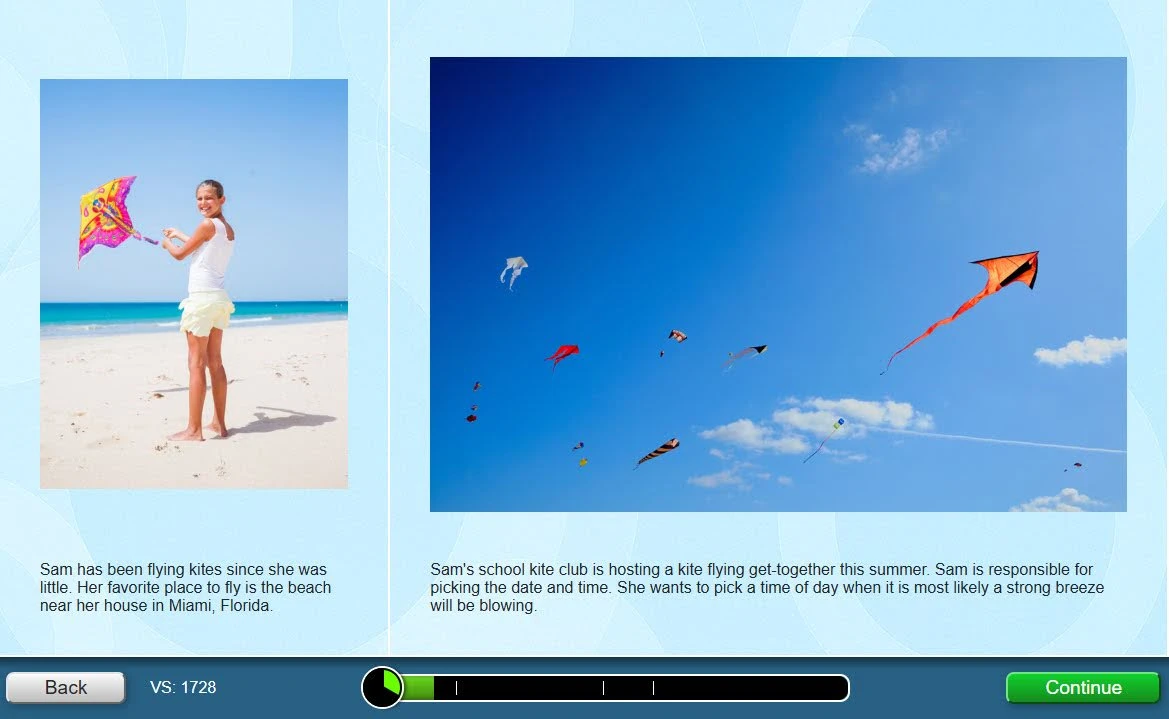
This Gizmo Investigation includes a series lesson for deeper, multi-day exploration of big ideas, as well as two standalone lessons—focused experiences designed for a one-class-period exploration of key concepts.
What students explore in the Coastal Winds Investigation
In the Coastal Winds Investigation, students are transported to Miami Beach, where they meet Sam. She wants to plan a kite-flying party for her school’s kite club, but when is the right time to ensure there will be enough wind?
To help Sam, students collect weather data for a day using the embedded Gizmo simulation, explore how temperature changes relate to the formation of land and sea breezes, and explain how temperature and density drive convection currents. As students progress through the investigation, they gather and construct evidence using guided CER (Claim, Evidence, Reasoning) frameworks, with real-time feedback providing support.
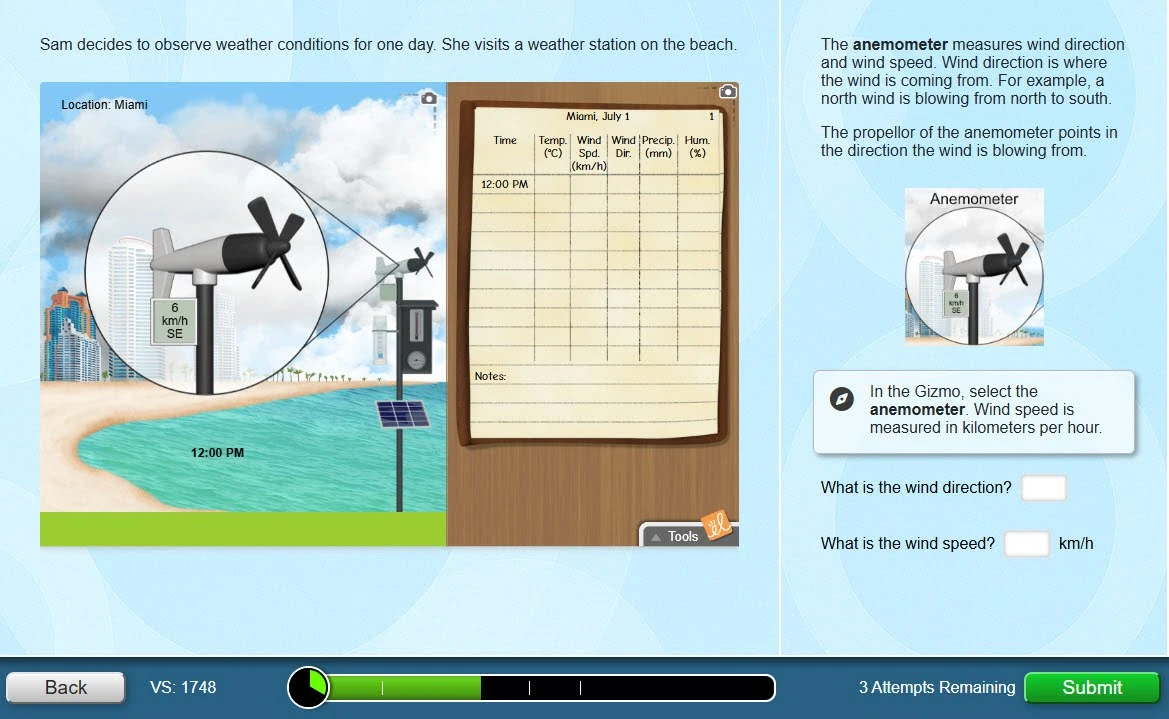
The multi-day Series Investigation is designed around multiple science practices found in NGSS and other state standards, including gathering and interpreting data, building a model, and constructing explanations.
By the end of the series, students will be able to:
- Measure temperature, precipitation, wind speed and direction, and humidity using tools in a weather station.
- Gather data on temperature, wind speed, and wind direction over the course of a day to develop an explanation of land breezes and sea breezes.
- Create a model of a convection cell.
- Analyze data on density changes in a heated fluid to explain fluid motion in a convection cell.
Two shorter, standalone lessons in the Coastal Winds Investigation provide real-world explorations that students can complete in one class period.
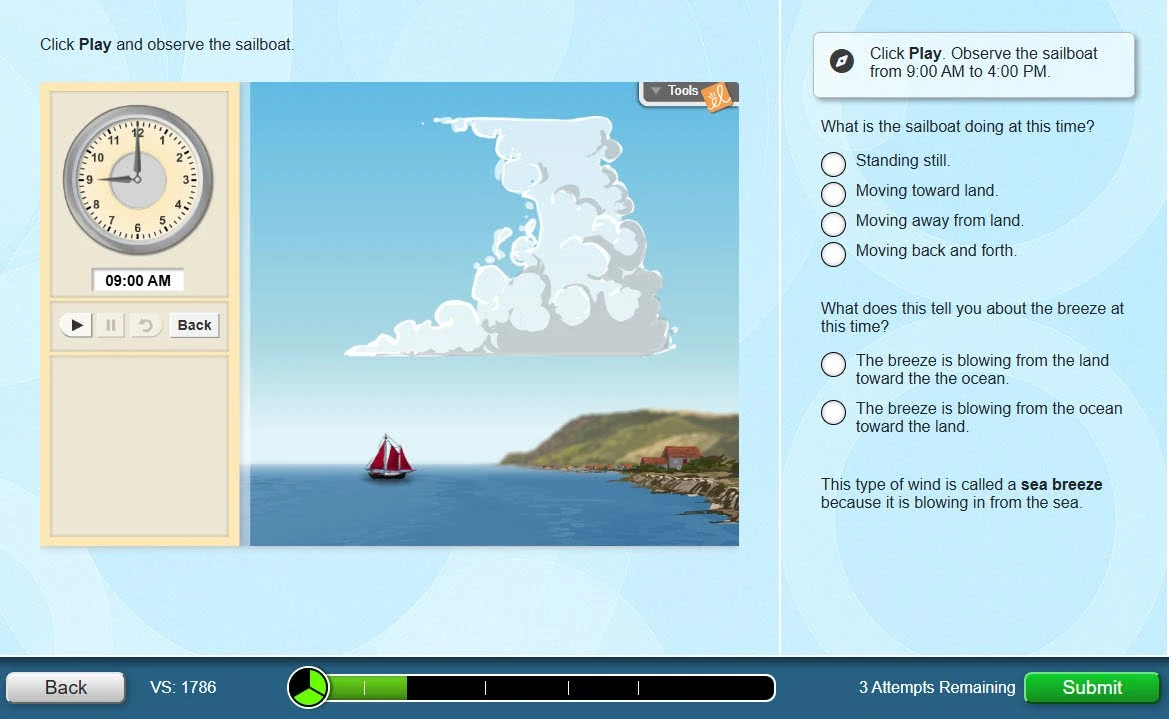
- Sailing Away: Students meet Michael and his uncle, a fisherman who sails out to sea each morning and returns every afternoon. The wind reliably carries the boat offshore in the morning and back to shore later in the day. What causes this daily wind pattern?
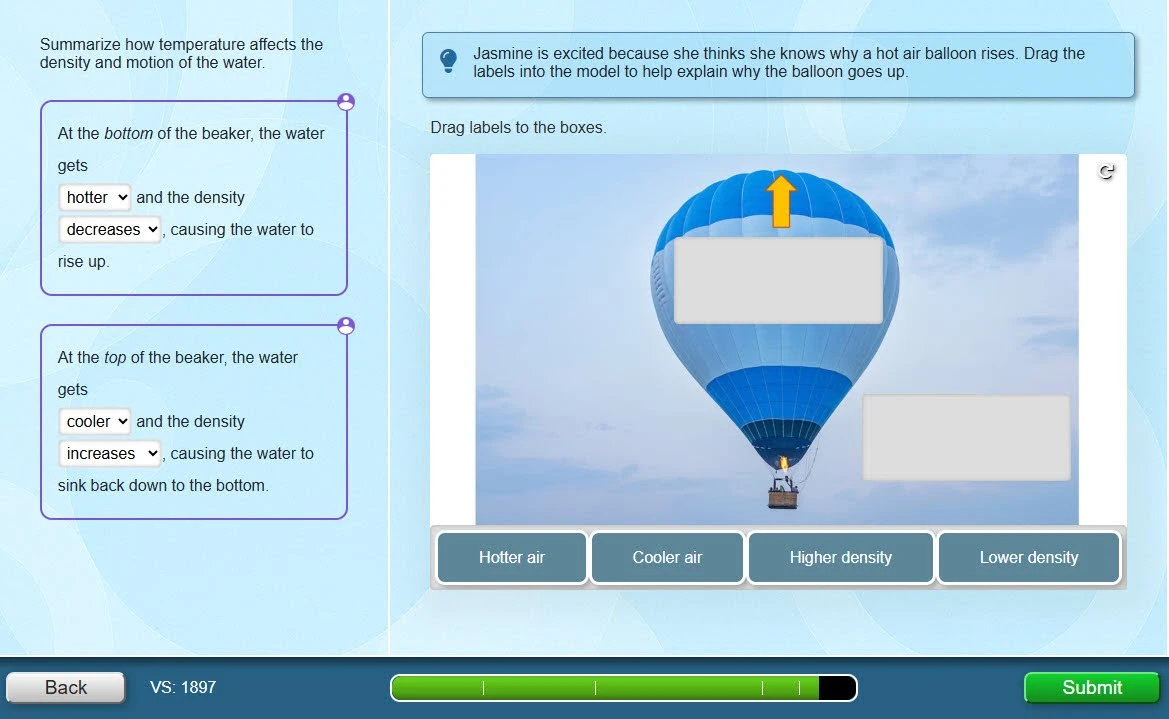
- Balloon Festival: Why do hot air balloons rise? At a hot-air balloon festival, students help Jasmine investigate by heating water in a beaker and observing changes in movement, temperature, and density. Using principles of convection, they explain why heated air lifts a balloon.
Why Coastal Winds is an effective entry point
Coastal winds are a concrete, observable phenomenon many students recognize, especially if they have been to the beach. That familiarity helps students ask better questions and make sense of abstract ideas like energy transfer and atmospheric circulation.
The Coastal Winds Investigation aligns well with weather and climate standards and supports key science and engineering practices, including modeling, data interpretation, and explanation. As an investigation, it helps students move from what happens to why it happens—a critical step in developing Earth science understanding through weather and climate lessons.
Supporting Earth science instruction with Investigations
Well-designed science lessons can significantly reduce the demands of lesson planning. Structured earth science investigations, like Gizmos Investigations, provide a clear instructional flow, so you spend less time building materials and more time supporting student thinking and sensemaking.
With real-time feedback, flexible delivery options, and assessments modeled after modern state exams, students are empowered to explore, test, and take ownership of their learning, which prepares them for high-stakes assessments and beyond. You get clearer insight into what students understand and where they’re stuck without adding extra planning time to your plate.
Investigations also support consistent earth science instruction across classrooms, helping teams align instruction while still leaving room for your professional judgment and unique teaching style. The turnkey nature of Gizmos Investigations makes implementation easy for all teachers, while still allowing flexibility and autonomy to design lessons using the Standalone Investigations (1 class period) and Series Investigations (3 class periods).
What are coral reefs, and how are they connected to Earth science?
Coral reefs are living underwater structures built by tiny animals called coral polyps. Often described as the “rainforests of the ocean,” coral reefs form some of the most diverse habitats on Earth. When introducing what a coral reef is to students, it’s important to emphasize that reefs are living systems (not rocks) that grow gradually as corals build hard skeletons made of calcium carbonate.
Coral reef ecosystems play a critical role in Earth’s systems. They provide food and shelter for thousands of marine species, help protect coastlines from erosion and storm damage, and support local economies through fishing and tourism. Because coral reefs respond quickly to changes in temperature, water chemistry, and storm activity, they are powerful case studies for understanding environmental change in Earth science.
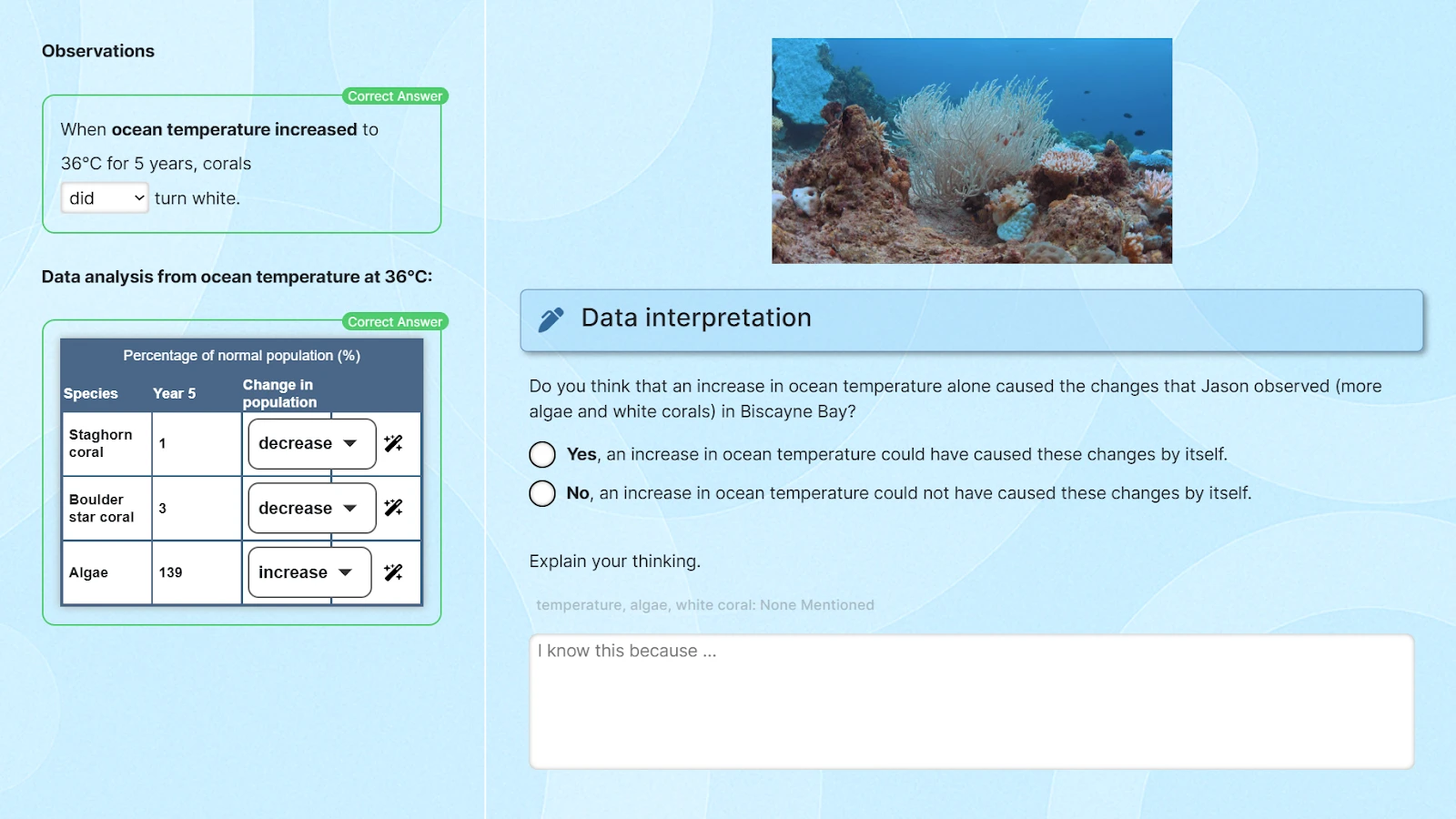
Teach coral reefs to students using Gizmos Investigations
The new Coral Reef Ecology Gizmos Investigation makes teaching coral reefs more interactive and phenomenon-based, with ready-to-use lessons for single and multi-day exploration. Through models and data analysis, students explore real-world questions such as "Why is biodiversity important in coral reefs?"
In the Coral Bleaching Standalone Investigation (perfect for one class period), students answer the driving question: Why did brightly colored corals turn white? Students manipulate an ecosystem model to test how storm severity, ocean temperature, and pH impact coral reef populations over time. By analyzing real data and gathering evidence, students construct scientific explanations and arguments about how abiotic factors drive changes in coral reef ecosystems.
Looking ahead: More Earth science Investigations to come
Earth science content continues to evolve, and so do the tools that support it. The Gizmos team will continue adding new earth science Gizmos Investigations to the Gizmos library, featuring exciting topics such seasons, hurricanes, and more.
The Gizmos team is committed to keeping science content current, relevant, and engaging for students as they work to develop phenomenon-based investigations across all science domains.
Teach Earth science with confidence and clarity
You don’t have to choose between rigor and accessibility when teaching earth science. Investigations like Coastal Winds help you bring complex ideas into focus through clear, engaging experiences.
With minimal prep and high instructional impact, you can help students build a real understanding of Earth’s systems while staying grounded in observable phenomena. Try Gizmos for free to explore the Coastal Winds and Coral Reefs Investigations and discover how you can teach Earth science with confidence, clarity, and curiosity.