
ExploreLearning’s newest STEM Case, Pimple Poppers: Natural Selection and Antibiotic Resistance, brings students into a hands-on, problem-solving experience designed to transform science education.
What is the new STEM Case?
In this new STEM Case, students step right into a bustling dermatology clinic, where breakouts, rashes, and mysterious bumps are all part of the job. They meet Jordan, a young girl on summer break who is avoiding time with her friends because of red bumps on her back caused by a bacterial infection.
After Jordan talks to her dermatologist, students take on the role of a microbiologist to understand why an antibiotic prescribed to Jordan did not clear her infection and find a new antibiotic that will successfully clear her condition.
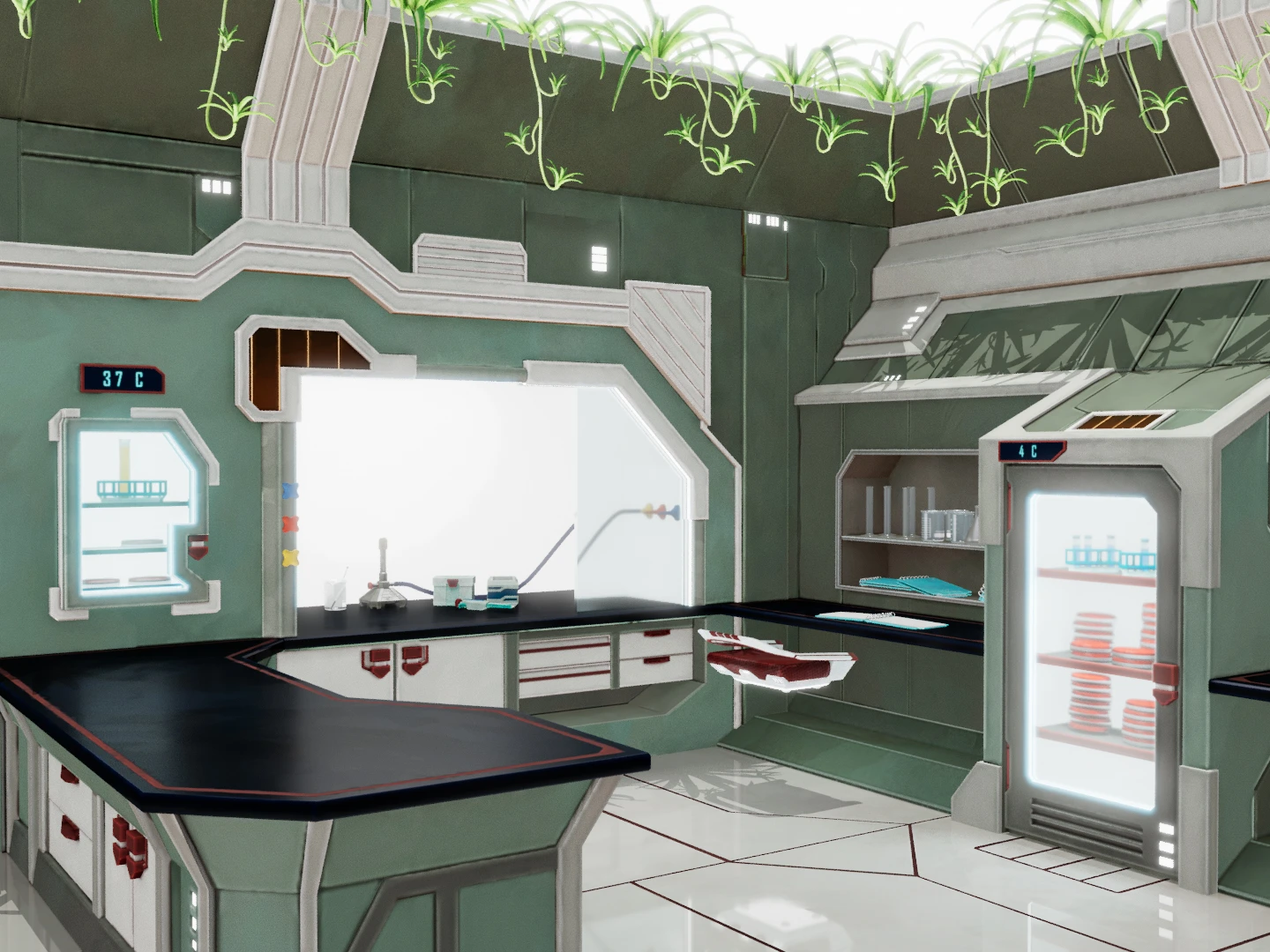
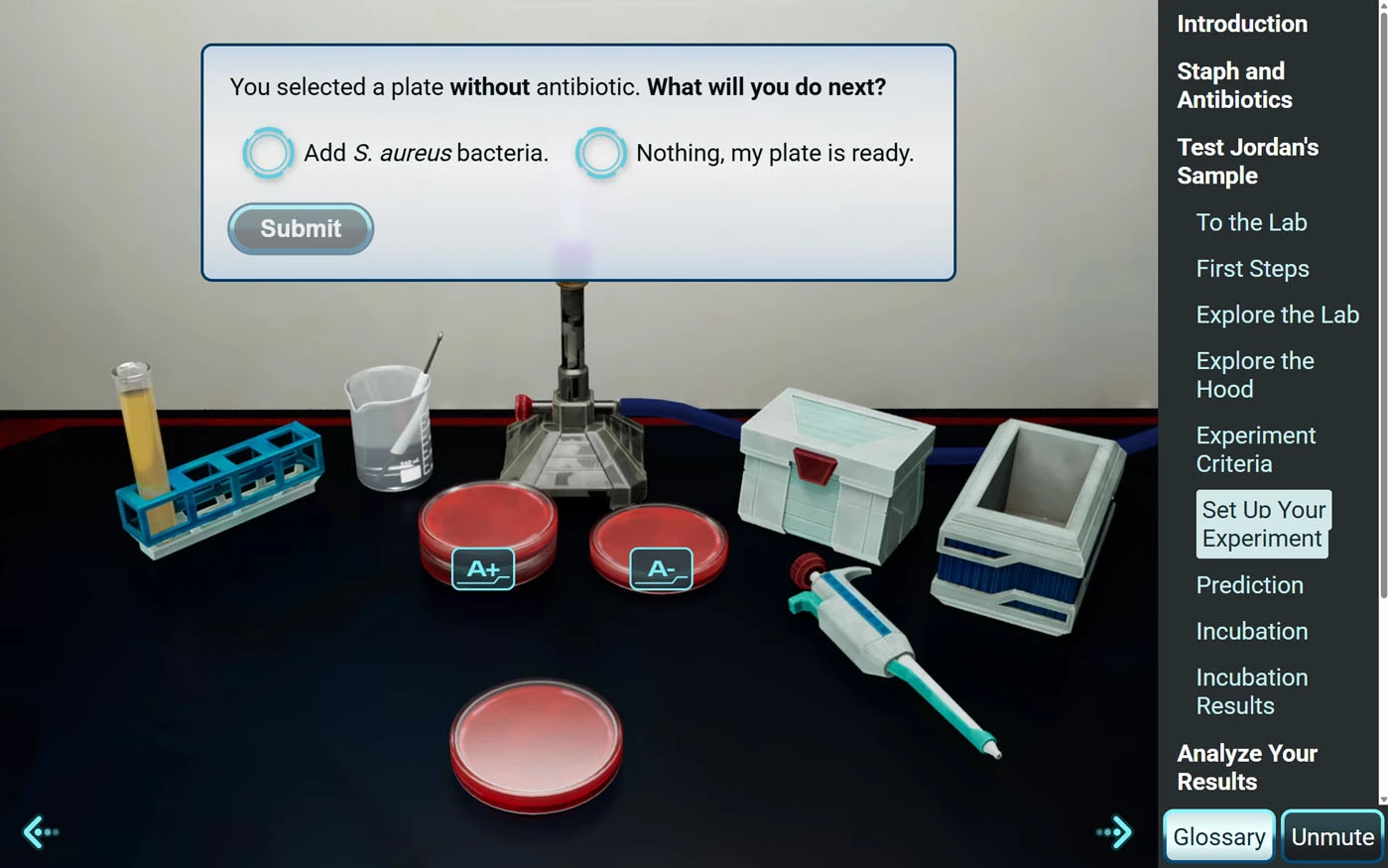
Students head to the microbiology lab, where they spend the majority of the case study designing and conducting experiments that involve growing bacteria on plates with and without different types of antibiotics. From their experimental data, students explain that antibiotic resistance arises via natural selection and use their data to confirm which antibiotic will successfully treat Jordan’s infection.
This STEM Case targets middle school standards, particularly Next Generation Science Standards MS.LS4.B and MS.LS4.C, which cover life science topics related to natural selection and adaptation. Antibiotic resistance serves as the real-world backdrop for students as they study these core biology concepts.
The STEM Case also engages students in the science and engineering practices, with an emphasis on "Planning and carrying out investigations" as students authentically engage with experimental design. As students investigate why an antibiotic treatment didn't clear up Jordan's bacterial infection, they learn how to design a reliable investigation and analyze the results.
Why this STEM Case matters for science education
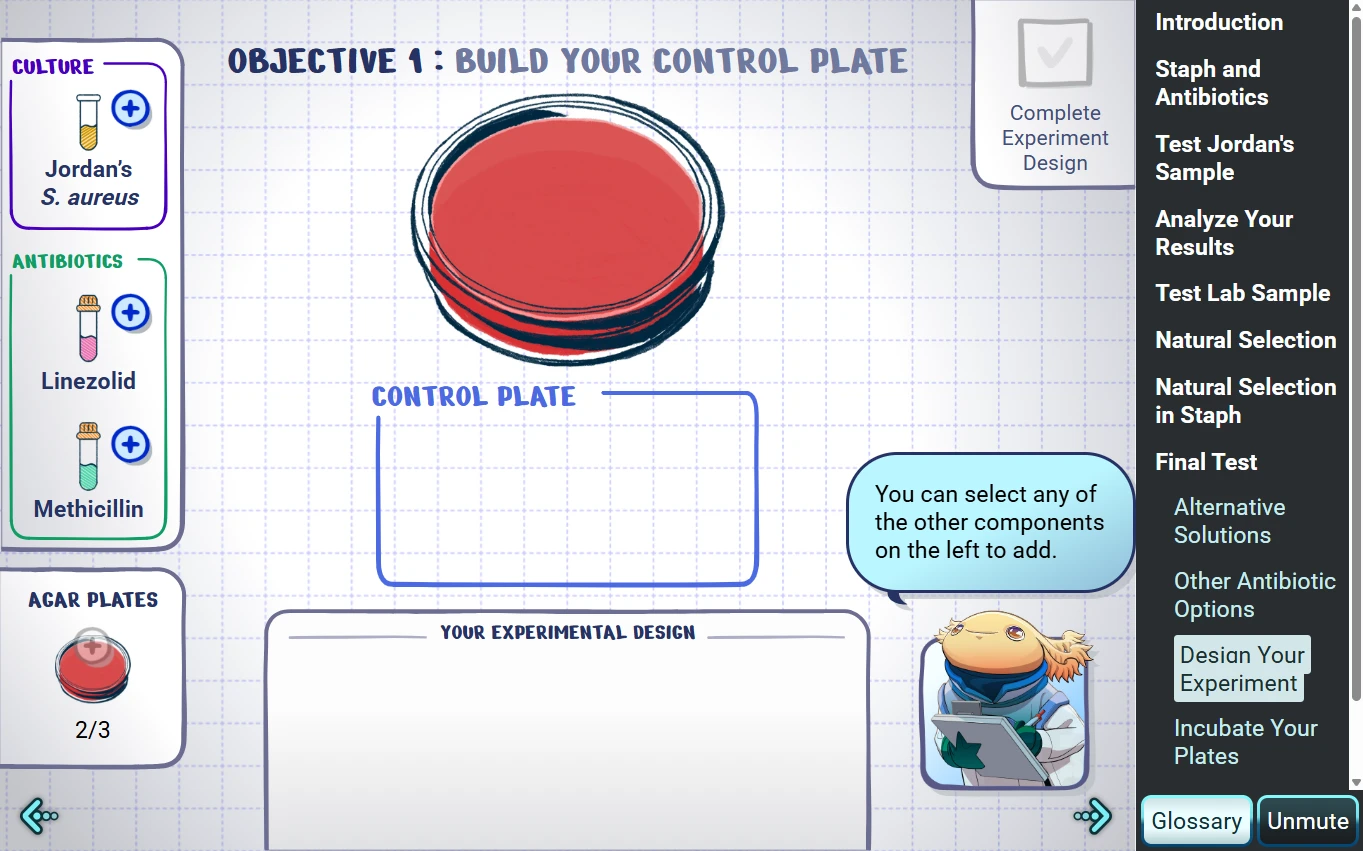
By embedding meaningful science content within a relatable medical scenario, this interactive learning experience helps students design a reliable experiment with a control group and an experimental group. Throughout the Pimple Poppers: Natural Selection and Antibiotic Resistance STEM Case, students get to design experiments and receive feedback on their experimental design choices.
“Teachers are going to LOVE how this STEM Case engages students in experimental design in an interactive way. Students get to set up their own experiments with bacteria and see what happens,” said Carrie Adler, Senior Learning Experience Designer at ExploreLearning.
Behind the Scenes: How the STEM Case was developed
Creating this STEM Case was a true team effort, blending scientific expertise with classroom wisdom to build an experience that feels both realistic and teacher-friendly.
The Gizmos team at work
Gizmos learning designers worked together for over 11 months to develop and refine the latest STEM Case, with Lauren Schetne leading the charge. The Gizmos team thoughtfully planned and developed 3D animations to enhance students' experience conducting experiments in Pimple Poppers: Natural Selection and Antibiotic Resistance. As a result, students feel like they are truly in the lab, plating bacteria with realistic tools microbiologists use daily.
Role of STEM professionals
To ensure accuracy and authenticity, the Gizmos STEM Case team consulted with STEM experts in the field to gather real-life insights to make the case study as authentic as possible.
Expert insights from the field
Dr. Adam Friedman, Professor and Chair of Dermatology at The George Washington University School of Medicine & Health Sciences, brought real-world insights and a wealth of knowledge related to dermatology to influence the STEM Case.
“I am a complex medical dermatologist,” said Dr. Friedman. “I focus on chronic and inflammatory skin diseases. From a research perspective, I do everything from nanotechnology drug development to identifying gaps in diagnosis and care as well as education.”
“There is a very big focus right now—and has been for some years—on antimicrobial resistance and the improper use of antibiotics for long periods of time, which in turn can lead to bacterial, or even fungal, drug resistance,” explained Dr. Friedman. “It takes these microorganisms very little time to develop resistant mechanisms. It takes us 18-20 years to come out with something new.”
Dr. Friedman leveraged his clinical and educational experience to make the Pimple Poppers STEM Case accurate, relevant, and engaging for students. “In designing this walkthrough of a case that clinically was called acne (a chronic inflammatory skin disease), that does include a microorganism that’s a part of our normal flora (the normal bacteria that lives on our skin and in our hair follicles), we wanted to see how a diagnosis of acne could mislead and lead to the misuse of antibiotics for their anti-inflammatory properties. But all-in-all, if it’s truly an infection driven by a microorganism like Staphylococcus aureus or Streptococcus pyogenes, the approach and the decision-making need to be quite different.”
“I worked on how we walk through the STEM Case to see what was realistic from a clinical perspective, but also what was meaningful for the student in terms of how they think about the clinical and actually go from the bedside back to the bench, and how they would evaluate whether this was truly an inflammatory skin disease versus an infection.” -Dr. Adam Friedman

Dr. Friedman completed his undergraduate training at the University of Pennsylvania and graduated with Distinction in Dermatologic Research at the Albert Einstein College of Medicine in New York.
His clinical expertise covers the full spectrum of medical and pediatric dermatology, and he’s equally dedicated to training the next generation of physicians through resident and medical education.
Dr. Friedman currently serves as the Department Chair, Residency Program Director, Director of Translational Research, and Director of the Supportive Oncodermatology Program in the Department of Dermatology at The George Washington University School of Medicine & Health Sciences.
Dr. Friedman’s message to teachers considering trying the new STEM Case? “First and foremost, have fun with it! Everyone has a unique interest in skin. It’s our largest organ, but it’s also the frontline to the outside world, and it’s visible.” Dr. Friedman also encouraged teachers to meet students at their current levels, both in science and in their day-to-day realities of skincare during the middle and high school years.
“We have to meet the students where they are. The way our students learn and digest information is not static—it evolves over time. Especially in today’s world, where access to information is so easy. The approaches to engaging with colleagues and our social networks through social media platforms have altered our brain wiring, but also how we think and learn,” said Dr. Friedman.
“The historic, didactic, podium-style teaching has definitely changed. It can be part of the overall recipe, but we can’t stick to one format. We have to provide different vehicles through which we can educate, because everyone learns a bit differently, and we are seeing a transition in how people digest information, especially at this middle-high school age range. Having a more interactive approach versus a ‘talking to’ approach will no doubt, from my own experience as someone who runs national meetings, be more effective.”
“I think this STEM Case is an opportunity as a teacher to empower students, especially when it comes to things students are probably dealing with, given how common inflammatory skin diseases are. You can get them excited about clinical medicine, and also about the bench and scientific approaches to defining a disease and distinguishing it from a mimicer.” -Dr. Adam Friedman
Dr. Sheryl Zajdowicz, Director of STEM and Applied Research Initiatives for the University of Wisconsin, also brought invaluable insights during the development of the STEM Case.
Key features and learning objectives
This STEM Case is packed with engaging tools, realistic scenarios, and intentional design choices that help students build a deep understanding of science while having fun along the way.
Interactive science learning
In the Pimple Poppers STEM Case, students engage with dynamic lab tools, including micropipettes, agar plates, and incubators, that make interactive science learning feel intuitive and fun. Every activity within the STEM Case reinforces core concepts, including traits, natural selection, adaptation, and reliable experimental design.
Real-world career connections
The STEM Case storyline highlights real-world science careers, introducing students to dermatology and microbiology as they design their own experiments with bacteria and observe the results.
“It’s not appropriate to divorce basic science and fundamental biology from the human experience. There’s a direct connection,” said Dr. Friedman. “By having a STEM Case where you’re taking a clinical picture—one that your audience can relate to or has some connection to, where they can see themselves even in that STEM Case—taking it back to the biology and then back to the clinical, will allow for a smoother transition from those different worlds, which historically were segregated, but really are interconnected.”
How STEM Cases support classroom engagement
Gizmos STEM Cases allow students to step into the shoes of real-world STEM professionals to solve complex, data-driven problems. These interactive case studies challenge students to think critically, analyze data, and make decisions just like real STEM experts.
Connecting science to everyday life
STEM Cases provide students with authentic learning experiences that connect to their lives. In the Pimple Poppers experience, students instantly recognize the topic of skin and acne, making the science behind it immediately more relevant. These real-world connections boost engagement and help students remember core biology concepts long after the lesson ends.
Preparing students for future careers
By experiencing science the way professionals do, students start to see themselves in STEM roles. Gizmos STEM Cases encourage curiosity, expose learners to a variety of real-world science careers, and help them build skills needed beyond the classroom.
Looking for resources to teach younger students about the immune system and antibiotic resistance? Explore Science in the News, an engaging monthly periodical from Science A-Z that covers the ever-changing world of science. Each issue features compelling news articles for kids written at three reading levels to allow for differentiated instruction. Check out the February 2026 publication!
Get ready to explore Pimple Poppers!
Teachers can access the new STEM Case with a free Gizmos trial or a full account subscription. Discover Gizmos today to bring your students the Pimple Poppers: Natural Selection and Antibiotic Resistance experience, plus a library of 550+ virtual labs, simulations, and new Gizmos Investigations.